
Our Innovations
Proprietary Technologies
Innovations that give our clients a decisive advantage in mineral exploration.
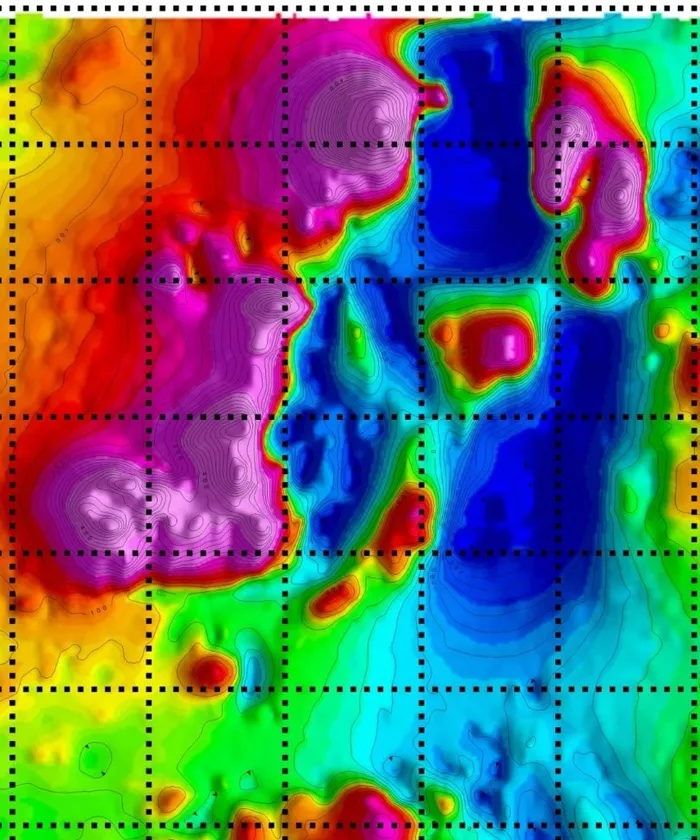
CAGE-IN: Constrained Area Gridding for Enhanced Interpretation
CAGE-IN technology enhances existing geophysical data to identify additional targets even in well-explored areas.
- Applicable to several mineral occurrences
- Demonstrated in porphyry, epithermal, and skarn deposit types
- Can be applied on pre-existing surveys as well as in conjunction with fresh acquisition
- CAGE-IN is an integrated interpretation approach that works increasingly well when geological maps, soil/rock geochem data, structural maps, and locations of historical/artisanal workings are available
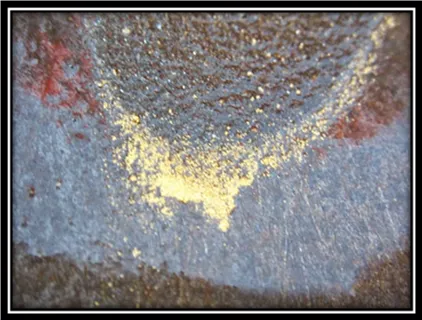
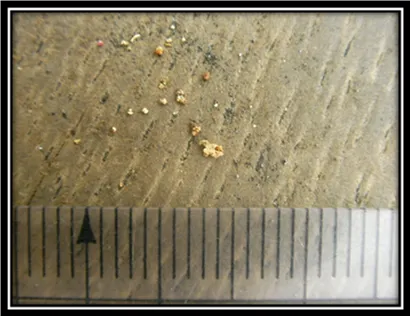
Gold Proxy Index: Solving the Nugget Effect
Coarse gold deposits are a mineral engineer's dream but an exploration geologist's nightmare. The extreme sampling challenges of the "nugget effect" — where erratic gold grain distribution makes grade estimation by drilling statistically unreliable — have long frustrated exploration teams and wasted drill budgets on excess infill campaigns.
To solve this, we developed the Gold Proxy Index: a methodology that maps and analyses the reliable structural, geological, analytical, and mathematical footprints that act as proxies for gold deposition. Rather than chasing gold directly, we model the system that concentrates it.
The result is a statistically defensible model that empowers your team to target and assess erratic gold mineralisation with significantly higher confidence — without blowing your entire budget on excess infill drilling.
- Applicable to coarse-gold and nuggety deposits of any style
- Combines structural proximity, ore chemistry, and pathfinder element distributions
- Produces a grade-proxy map your QP can use as input for resource reporting
- Reduces infill drilling requirements while improving resource confidence category
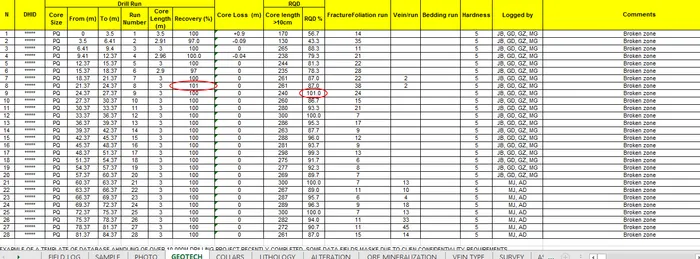
Drill Database Corrections
Common sources of error in drill databases are data entry errors. We have developed several multi-level QA/QC routines that clean drilling databases of errors by flagging locations of potential errors.
- Clean databases ready for modelling
- Data validation within defined ranges
- Comparing data records with 3-element and 5-element averages of numerical data
- Comparing multiple entries of text data
- Deviations flagged for supervisory verification
Interested in Our Technologies?
Contact us to learn how these proprietary tools can be applied to your exploration project.
Get in Touch