Blind validation
Carlin-type Gold district
Run blind over a mature Gold district, the multi-evidence scoring independently recovered the known district footprint — no leakage, no tuning to the answer.
Case studies
See what CAGE-IN found on real programs — the conventional read, then the targets it surfaced. Each headline case locks to centre as you scroll. Project names, locations and owners are removed for confidentiality; the methods and outcomes are exactly as delivered.
 Without With CAGE-IN
 Headline case · Copper-Gold Porphyry
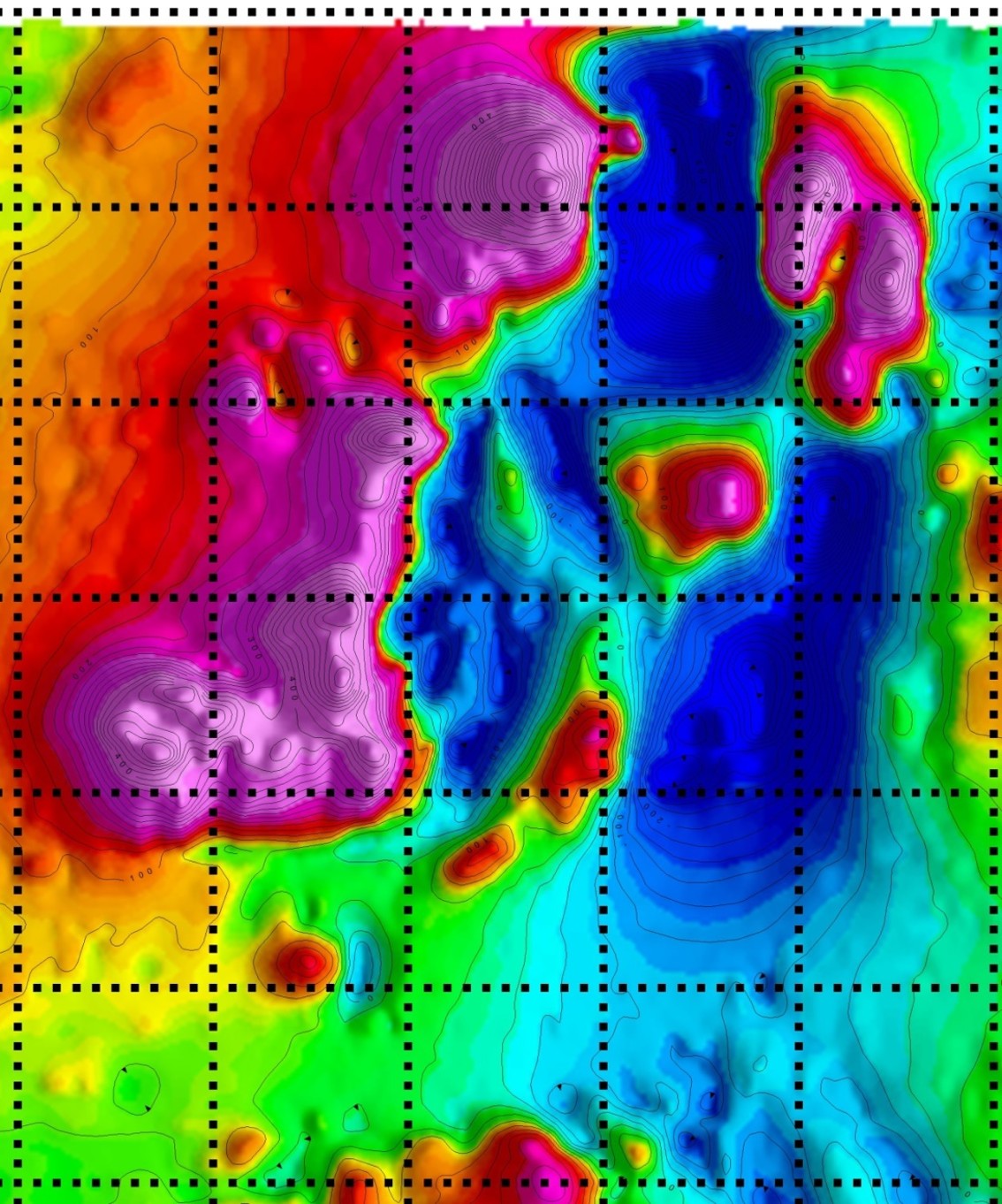
Conventional interpretation of the airborne magnetics resolved one known Porphyry centre — the rest of the survey read as noise.
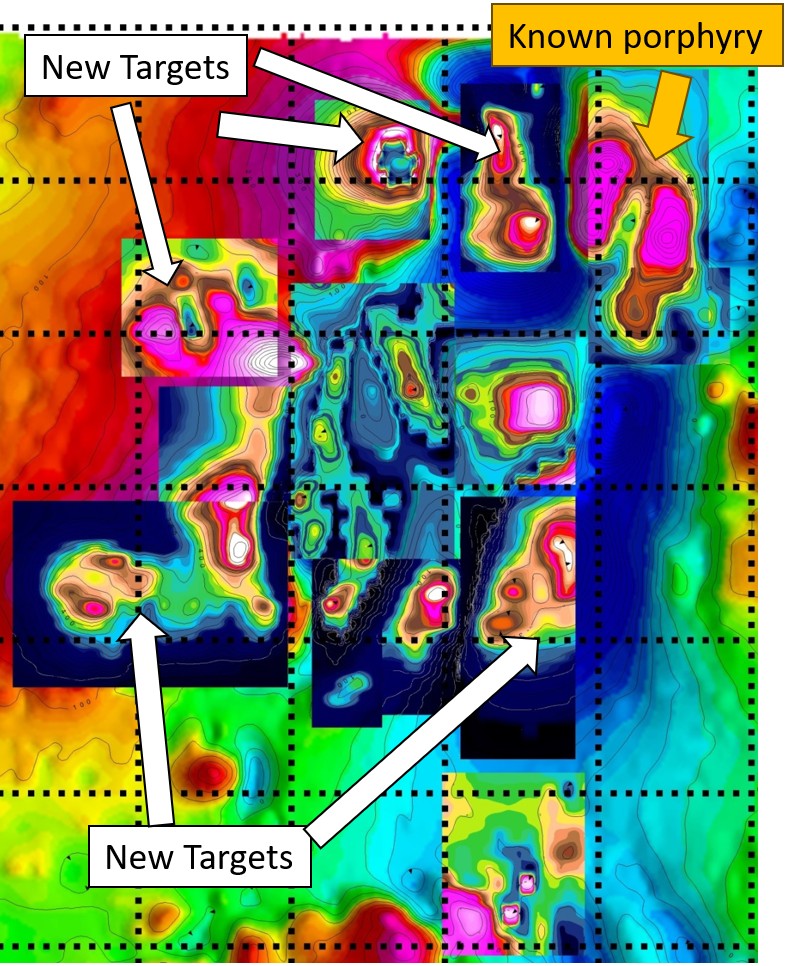
Re-read by CAGE-IN, the same data resolves that centre plus a cluster of new, ranked Porphyry targets around it.
Fly the 3D model of this system →Client confidential — no client, project or location disclosed. Resource figures as independently reported.
 Without With CAGE-IN
 Headline case · Greenfield Nickel
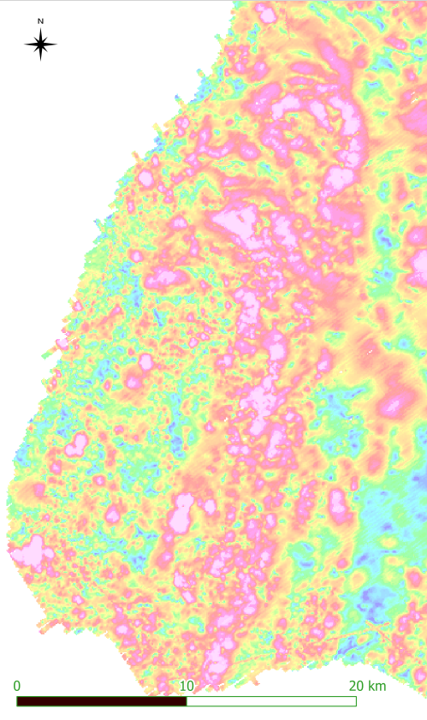
Regional datasets, read on their own, gave no clear targets across greenfield ground with no prior drilling.
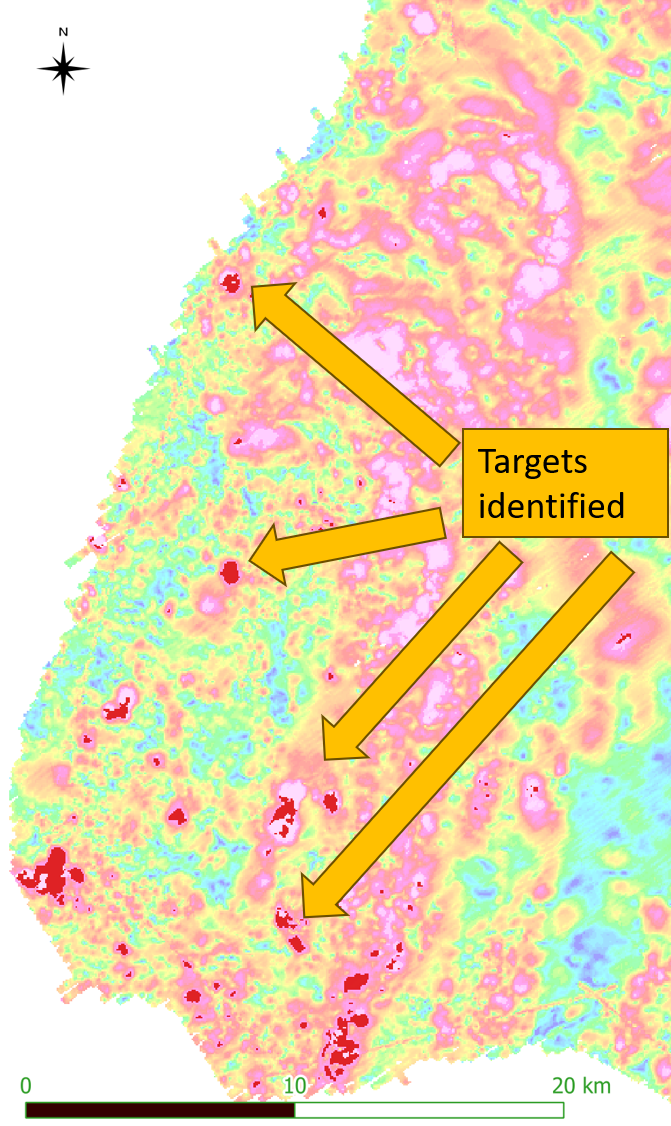
Fused by CAGE-IN, the same data identified, ranked and drill-confirmed discrete Nickel targets — carried from raw archives to the rig.
Client confidential — no client, project or location disclosed.
The flagship Nickel program, by the numbers
More of the record
Two further programs where CAGE-IN turned a weak or ambiguous signature into a defined, drillable target. Drag each slider to compare.
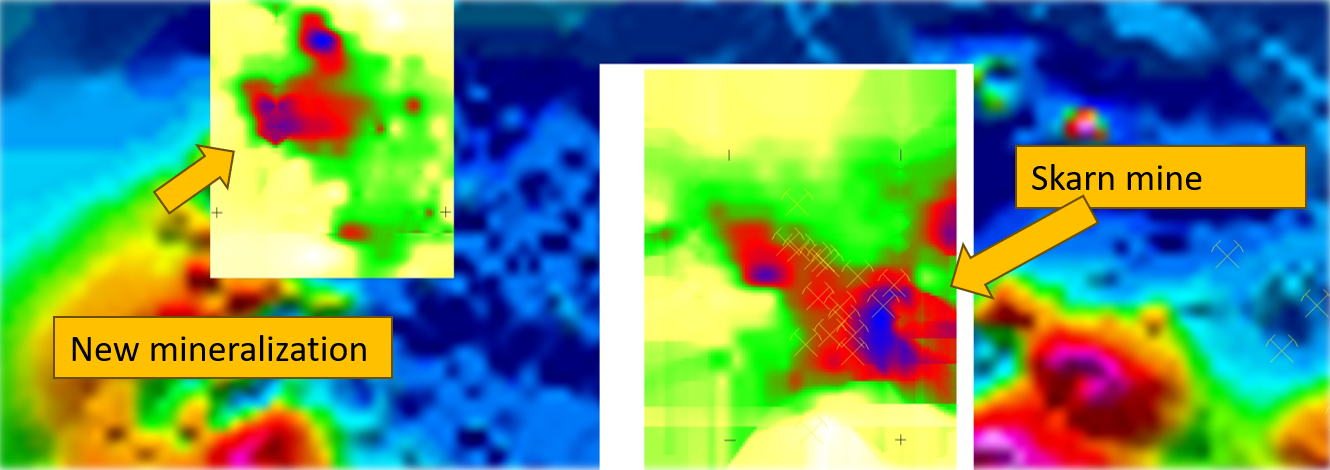
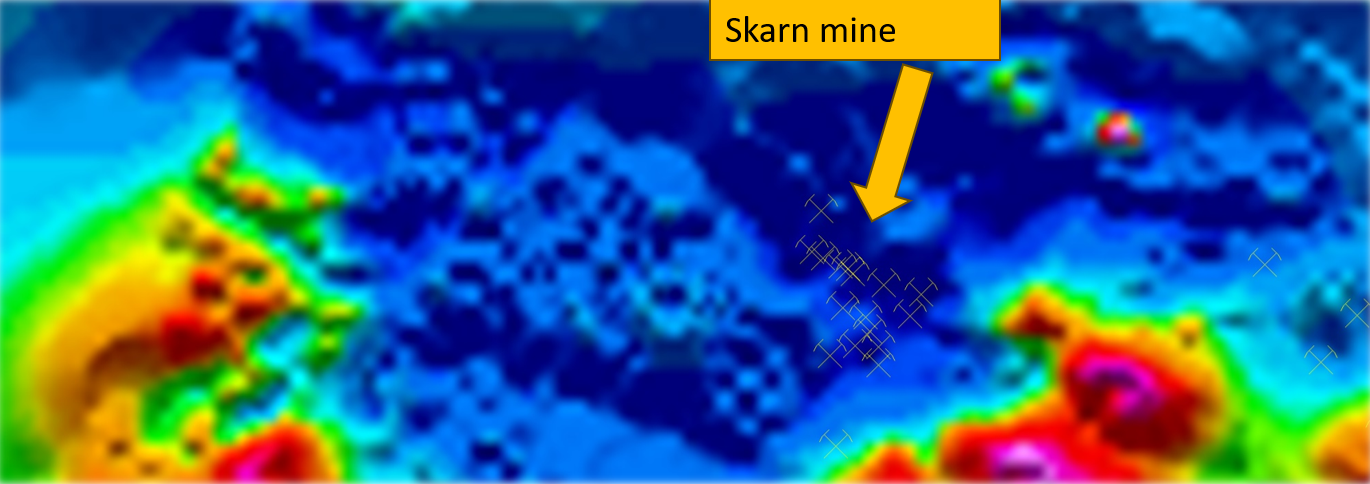
Skarn · Gold-Silver
Without CAGE-INOperating Gold-Silver mine in a Skarn adjacent to a granitic intrusive. Geophysical signatures of mineralization were very weak and could not be used to identify or expand mineralization trends.
With CAGE-INCAGE-IN defined the mineralization signature by combining multiple layers of data. Signatures became visible in geophysics, and new similar signatures were identified NW of the existing mine — immediate drill targets for brownfield resource expansion.
Epithermal Gold
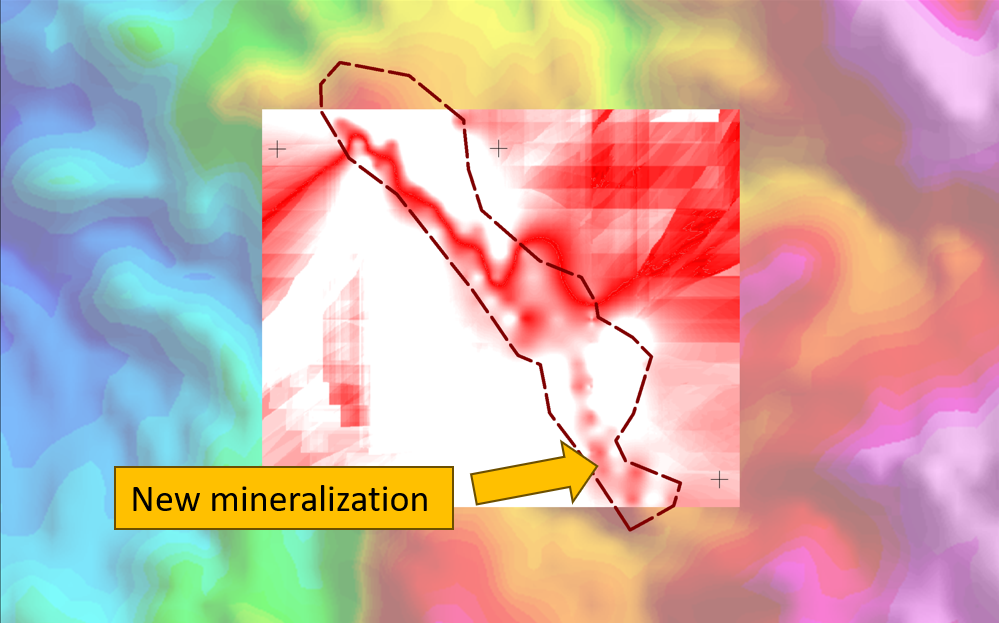
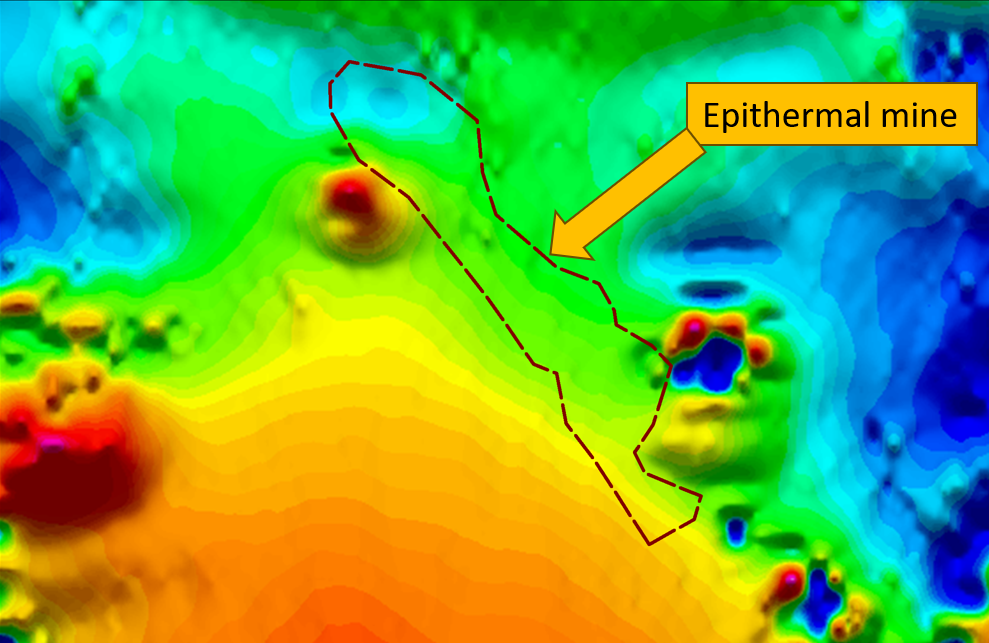
Without CAGE-INOperating Epithermal Gold mine had indistinguishable geophysical signatures — no contrast between ore and waste. The weak contrast could not be used to identify or expand mineralization trends.
With CAGE-INCAGE-IN defined the mineralization signature by combining multiple layers of data. Signatures became visible in geophysics, and new similar signatures were identified along strike of the existing mine — immediate drill targets for brownfield resource expansion.
Blind validation
Run blind over mature districts, with no training on the answer, CAGE-IN re-found what decades of drilling had already confirmed. If it can recover the known, you can trust it where nothing is proven yet.
Blind validation
Run blind over a mature Gold district, the multi-evidence scoring independently recovered the known district footprint — no leakage, no tuning to the answer.
Regional scale
Multi-evidence prospectivity across a Craton-scale search space — the platform at regional reconnaissance scale, turning a national dataset into a ranked map in days.
Instant interactive 3D viewer · no login · runs in your browser, even offline
Case results are presented in sanitized form for methodology illustration, with project-owner consent where applicable. Nothing on this page constitutes disclosure of exploration results under NI 43-101 or the JORC Code, and no economic potential is implied.
Every engagement starts with a 48-hour Prospect Brief — your data, the full council, a fixed price.
Get the 48-Hour Prospect Brief